Search Auri Energy

40 pages to explore

Transformer and feeder monitoring

Understand how each feeder and phase contributes to the load on a distribution transformer. Give operations and planning teams a closer view of the circuits that supply their customers.

Power quality

Connect voltage complaints and power-quality events to the equipment, phases and operating conditions behind them.

Fault and outage investigation

Relate a feeder interruption, fuse event or breaker indication to the part of the network it affects and the information the field team needs.

Energy balance and loss investigation

Compare feeder energy with the meters supplied by that circuit, then examine the difference with technical losses and data coverage in view.

Transformer asset intelligence

Understand repeated overload, phase imbalance and the conditions that contribute to transformer stress before deciding what to inspect or replace.

Metering and field integration

Make meter records more useful by relating them to feeders, phases and transformer areas, alongside the equipment already in the field.

SCADA and station integration

Connect existing relays, RTUs, meters and station systems with local records and the broader Cetus network view.

Secure operations and lifecycle

Bring equipment identity, access, configuration and update records into a controlled engineering process.

Grid twins and network planning

Bring equipment, connections, measurements and assumptions together before assessing a change to the grid.

Grid capacity coordination

Bring distribution constraints, transmission needs and connected-resource availability into a shared capacity discussion.

Generation and connection coordination

Connect generation units, plant equipment and availability information with the constraints at the agreed grid connection.

Install & commission

Plan the transition from installed equipment to an accepted operating system.

Upgrade, repair & extend

Develop a practical route from an existing installation to the functions it needs next.

Training & development

Build understanding across the people who design, commission and operate the system.

Consultancy services

Turn a broad modernisation ambition into an engineering brief.

Grid modernisation & digital transformation

Create a migration path that respects the network already in service.

System studies & network planning

Start a network study with a model the engineering team can trust.

Renewable & distributed energy integration

Understand new generation in the context of its connection.

Digital twin & data strategy

Give every observation a place in the electrical model.

System integration & technology roadmapping

Make integration a designed interface, rather than a hidden dependency.

Infrastructure assessment & asset life extension

Assess what is worth retaining before planning replacement.

Electronics development

Develop electronics around the signal, power and environment the product must handle.

Product enclosures

Treat the enclosure as part of the electrical and service design.

FPGA development

Match programmable logic to the timing and data path the application needs.

Firmware design

Connect the physical product to predictable, maintainable behaviour.

System design

Bring hardware, software and operations into one requirement.

Product design

Carry the intended use through to the physical product.

Cabinet edge controller

Bring feeder, breaker, metering and cabinet observations together. Keep local analytics, retained history and communication close to the transformer.

Feeder monitor

See current, voltage, power and energy at the individual feeder. Relate phase imbalance, loading and power-quality records to the circuit that needs attention.

Breaker control unit

Connect switching indications and supervised breaker interfaces with the equipment and event they describe. Keep the requested action and resulting feedback clear.

Serial telecontrol and IED gateway

Connect installed meters, relays, compact RTUs and other serial equipment with the Cetus network view through a defined integration profile.

Substation automation gateway

Bring Ethernet-connected IEDs, relays and station automation into a common operating picture, with their identity, timing and source information intact.

Meter integration interface

Relate meter readings to the circuit they measure. Support missing-read and energy-balance investigations with clearer network associations.

Three-phase fused switching

Plan outgoing switching ways alongside the monitoring and supervision the cabinet needs. Keep the electrical arrangement and equipment requirement together.

Cetus Platform

Edge, Central, network views, grid twins and local analytics

Solutions for grid operators

DSO, TSO and generation company / IPP operating context

Engineering services

Pilot assessment, integration, commissioning, training and lifecycle

About Auri Energy

The company and our engineering approach

Resources

Documentation, cabinet configuration and demonstration requests

Contact Auri Energy

A tracked enquiry for sales, engineering, partnerships or support

For a changing energy system

Solve the problem where it starts.

An overloaded feeder, a recurring voltage complaint, a missing meter read or a constrained connection each tells part of a bigger story. Find the measurements, relationships and tools to investigate it.

A clearer perspective

Different responsibilities. Connected intelligence.

Start with the assets you own, the people who operate them and the decisions they need to make.

01 / Distribution

See below the station total.

See individual feeder conditions, investigate losses and connect outage or maintenance work with the transformer and meters involved.

For DSOs: LV and MV visibility, loading, phase balance, loss investigation and field-work context.

Discuss your network
02 / Transmission

Understand the interface.

Bring transmission needs together with approved distribution and generation information. Review constraints and capacity-assessment readiness across the agreed boundary.

For TSOs: C-GCC workspaces, declared exchange boundaries and evidence for capacity coordination.

Discuss your network
03 / Generation

Put plant readiness in context.

Relate plant availability to its equipment, connection limits and the receiving network. Share the information needed for coordination while retaining control of your own installation.

For generation companies and IPPs: owned asset context and agreed information exchange.

Discuss your network

Applications in the real world

Start with the problem your team needs to solve.

Explore how field measurements, local intelligence and the network model come together around everyday utility decisions.

Cetus Platform / by Auri Energy

Turn field information
into a better operating picture.

Follow a measurement from its feeder to the transformer, the network and the team investigating it. Cetus connects local intelligence with a shared electrical model and applications for the work that follows.

At the equipment

Cetus Edge

Local analytics, grid twins and retained records. Send selected events and summaries to reduce unnecessary data transfer.

Across your network

Cetus Central

Network views, engineering and evidence-led workspaces, configured around your ownership and operating scope.

Discover Cetus Platform
Cetus CentralNetwork engineering
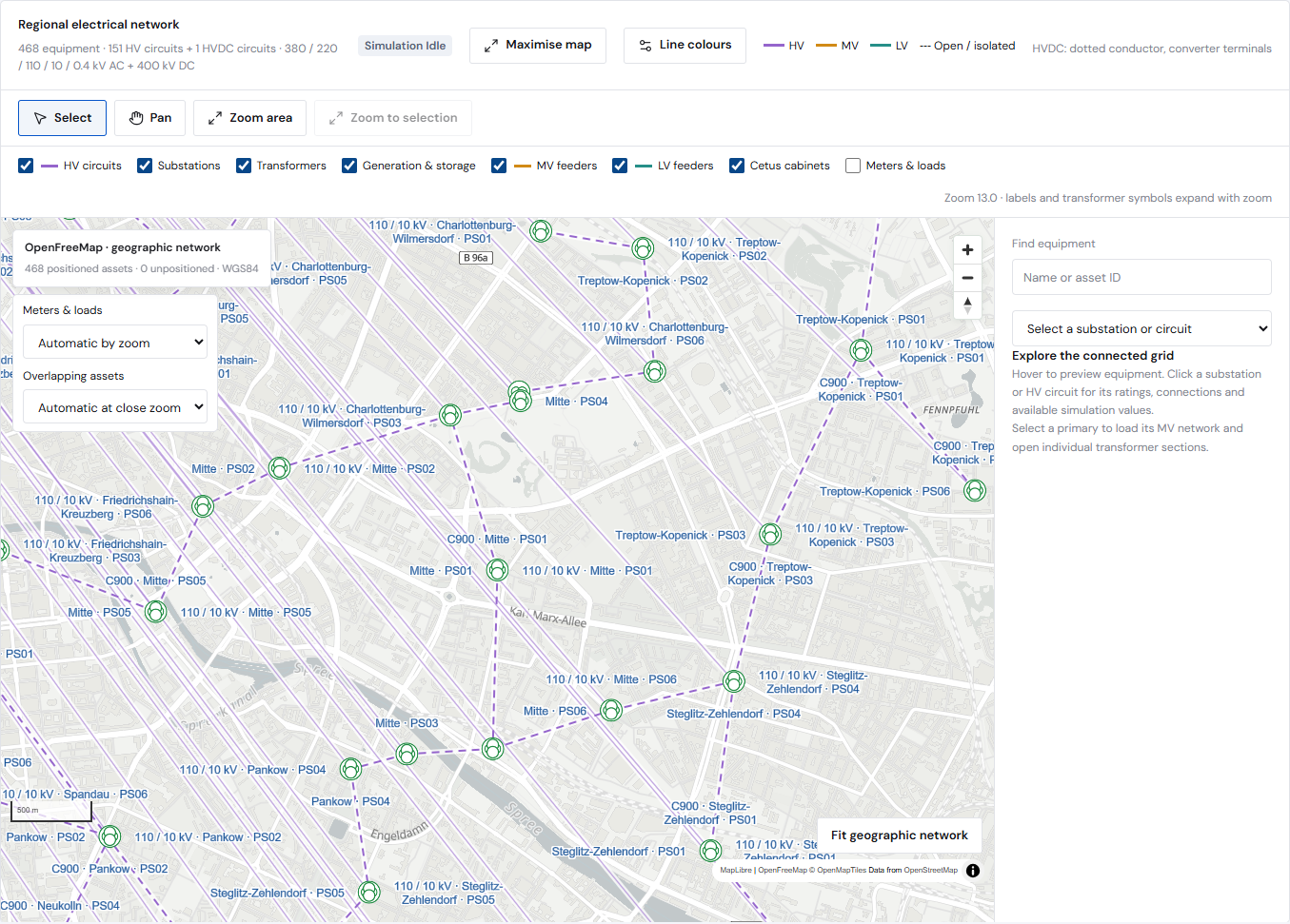
Cetus geographic network view with example electrical equipment and connections
Example network data in the Cetus application.

Start with your network

Let’s work on what matters.

Talk to Auri Energy

You can browse and send requests without accepting optional storage. Choices apply separately to each website and are remembered for up to 180 days.

Read the Cookie Policy